文稿来源:Megaphone 音频 + 豆包语音识别;机器转写可能有识别错误,人名与数字请以音频为准。
I think what came together is obviously an understanding in Europe that Europe needs to take more responsibility for its own defense. You know, that is of course uh something that the US have told us repeatedly. um, And they're right, you know, Europe has to step up, and needs to be able to defend itself, because that is our way of continuing to live in peace. It's deterrence, right?
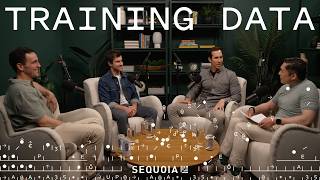
My partner Luciana and I are here with Uwe and Johannes, the co-founders of Stark, a neo prime serving the European defense community. Gentlemen, thank you for joining us. Thank you so much for having us. Thank you. All right, to get things started, you guys landed billions of dollars of contracts within 18 months of starting the company. Which I believe is unheard of in the defense business. What did you do right? How did that happen? So obviously, you know this is something that we like to claim as a big success, but it's also probably a moment that is just Optimistic for for all of us, because something has changed beyond just what we built in our company. and we moving the right direction, I think in Europe. What we did specifically, I think is Four thanks. We did innovation really close to the battlefield, so really being integrated with units and soldiers who actually use the systems. Then be venture first, thanks to Sequoia and others, which basically means We fund the innovation, kind of the product development ourselves. We don't rely on some government R and D spending. We focus on designing the products in a way that they become really usable and mass deployable. So beyond pure innovationuh, Use cases all the way to certification, validation, safety of the systems, so really usable for NATO forces. And then number four We designed them the products clearly thinking industrial scaling from the get go. Like how can we make sure that those are not only a few exquisite systems that you know stand around somewhere. But how can we make sure that, you know, factory is part of the weapon, you know, production is deterrence. Now let me ask you a point number one close to the battlefield. I'm guessing that most military units would not let a couple of random guys. Trips into their units, and understand their needs. Like, how how is it that you gained access to the battlefield so early in the life of the company? We do that with a large presence in Ukraine. um, So we have a large team in Ukraine, and we integrate in those units quite uh quite extensively. We also do work with the European forces, so there are more and more formats I would say where That thing is enabled, so you can connect with the soldiers, you can show up with them. you can go to the battleground, and we like the the testing grounds, the training grounds, and that's where you get the best. feedback. That is the most important input factor for us. The capital we can get, you know, again, thanks to the soy and other people. But what we really need is that input of the customer. Which is not necessarily the buyer, right? The buyer is probably some you know high level official, but the customer oftentime is a relatively simple soldier, you know, on an operational tactical level. We did, we need their input. That's more important to us than anything else. Well, and just a level set on what you guys do. What is it you heard from those customers? And what's the product that you've now given them in response? So we at at any point in time, we probably run 10 to 15 different programs, almost like a venture like uh innovation portfolio. The one at the moment is a you know a you would probably call it a strike drone, it's actually a munition, but it's like a A weapon system that is very much software and AI driven. and it's relatively inexpensive compared to what other weapon systems are out there. And we got a lot of great feedback on the usability. You know, there is We only begin to understand what does it do to the mental load of a soldier, for example, who is supposed to operate those unmanned swarms. How exactly does that work? How should the box be created? um, Should it be wood? Should it be plastics? um, How, you know, how do how do we visualize a swarm on a small screen so that a soldier can operate it? Earlier you had this interesting anecdote about Plastic versus wood on the boxes that go into the field. Can you share that anecdote? Cause I think that really illustrates kind of the difference between the lab and the field. 1000 percent, because like You often have those great ideas how this product should be, and you came up with the idea on the whiteboard, and then you put it in front of the users, the soldiers using it. In the field, either you know, in in real battle or in trainings and simulations, and sometimes it's you know very very different. So for example, we show up with this beautiful plastic box that is light to carry, and the soldiers look at us like What do we do with this? Why don't you give us wood? Because wood at least we can, you know, put in the fire and it keeps us warm in the winter. And like, didn't think about that. Ha ha ha ha. um, And there's many anecdotes like that, there is The feedback is so valuable. So, traditionally you would say, you know, most important soldiers in, you know, the product development and uh the procurement are the generals who tell you that's where the big big budgets are, and you should do this and that. And of course we always like to say, you know, the staff sergeants, uh, the enlisted personnel who then actually use those systems are maybe even more important to us, because in like in a true startup spirit. you wanna be close to the customer, you wanna develop for that customer. The customer for us, yes, it's the buyer, but it's also the user. And tho- those are not the same people in the military situation. um, And we just beginning, for example, to understand If you think about a drone swarm that you are now controlling, how exactly do you do that? Like, do you have a mouse, do you have a keyboard, do you have a touchpad? How sh- how does all that work? How do, how does it work when you wear gloves, you know? What clicks are OK? Where do you need to be really precise? All those things, uh, what is the mental load? How many inform, how much information can I process at the same time? We're only beginning to understand. And if you treat soldiers, they are used to industry just showing up and dumping stuff on them, saying like here, this is the best thing, you know? If if if you have issues with it, it's because you didn't understand it. You really need to change it around. You need to treat them as your customer. The most valuable thing they can give to you is their time and their feedback. And sometimes we show up, and they say like, you know what, this is absolute shit. But you can really win trust by saying, tell us how exactly this shit. And we'll show up again tomorrow or the day after tomorrow. We do, you know, we create a new version, and it will be a bit little bit less shit tomorrow. And that goes a long way. And uh some of the things that make me Proudest of this company is, we gained like a lots of you know minds and hearts in the in the community, but people saying you know what? Those guys They approaches from the right perspective. You know they have a soldier's centric view, and they really want to build a product that's good for us. It's quite obvious for startup people, right? Probably all every everybody who sits here says like yeah, we want to build for the customer. The customer needs to be happy, Net Promoter Score, and you know, retention and ARR ARR growth. And for us the translation to that is listen to the soldiers, build with them, build for them, and hopefully good things will happen on the procurement side as well. Can we take a step back? You mentioned that there is a A favorable mo- moment in Europe right now for building defense companies. And Ovi, you and I have known each other for a long time. We started as venture capitalists in Europe, and you saw the opportunity in defense before other people. You in, you were investing in defense. um, before, way before it was obvious, I would say. And you also have a background in the military yourself. Can you tell us a little bit firstly about what came together in Europe and and Why there is this opportunity to build a new new prime today? I think what came together is obviously an understanding in Europe that Europe needs to take more responsibility for its own defense. You know, that is of course uh something that the US have told us repeatedly. um, And they're right, you know, Europe has to step up and needs to be able to defend itself, because that is our way of continuing to live in peace. It's deterrence, right? We probably understand now that the The world is unfortunately probably not as default peaceful as it ideally would be, but it needs to be defended, and the only way we can be safe is By deterring a potential attacker. So that understanding has really you know really materialized in people's minds, and it came together with a point where people also understand Something's happening on the battlefield. New technologies emerge, it's software driven, AI driven, it's relatively inexpensive to produce, it is small scale. And those two points, you know, came together, and we give a lot of credits to the Germans and other governments, who also understood well. If that's the case, we should A, procure those solutions where the capabilities that we have are lacking, or there is a gap. And we also need to change the process of how we procure, because You don't procure a drone like you procure a battleship, you know, it's just different. So that did come together, and that was also probably like the starting point for us uh coinciding us with the funding company saying, okay. Now we need to lean in. Does this going to be like one of those moments where in a few years we'll probably will ask ourselves what did we do during that time? And for me, you you kind of mention my biography. Things really came together, uh, two big extremes like a interest in military and security, international, you know, relations, things like that, and then The technology part, uh, so was quite a clear moment for me. is that like, OK, I need to step in. You think that the procurement process changes are sustainable? Or do you think this is a moment in time for Europe, for German.
and other european countries. I think they are sustainable. um, Changes like that in Europe. They don't happen because there is like a charismatic leader who says, you know, we need to change, this is the way, follow me, here's a great narrative. That's not how Europe works. Europe works based on Oh, I guess we kind of have to do it now. It's reality kicking in. And the positive side of that would be hopefully changes are more lasting because they are based on actual structural fundamental changes, and you know now we are in a new world. um, And that's what gives me hope that we change procurement processes, um, that took years to months, and that includes the certification, which is a big big part of what we do. It's a very boring topic in a way, but it's very very important. I think those changes are there to last, because the real learning from, you know, the Ukraine Russia war is probably not drones, no drones. It is about an innovation ecosystem. That is the actual wonder weapon. You know we always like to read on the internet like what new weapon system, what, how awesome is it? That doesn't really matter. The whole point is how do we as western society set up ourselves so that we can continuously innovate in defense? With all the different ingredients, we'd already talked about the input from fighting soldiers. There's a talent aspect of it, you know, like our our smartest minds should be willing to work in defense. um, There's a capital aspect to it, and all that stuff. um, I think that is there to to to last. I'm I'm quite hopeful about it. What advantages do you guys have? As a two year old company selling into the defense apparatus, that a seventy year old company selling into the same customer might not have. In that field You know that segment of the market, the inexpensive, the AI driven, the uh mass scalable systems, you know, our strike drones come to mind, but also for example, unmanned boats, you know, and things like that. It is, so so we have a startup DNA, like we build the prototypes, like you would prototype in a startup pretty much. um, And we build them from the get go. To be mass manufacturing items. um,um, Which is not something that defense typically does.
And when we walk into our factory, we want, just few days ago, had some operational experts, and they looked at us and like, oh, this is about as complex as a washing machine. And I don't know if they try to insult those, but it is exactly where I wanna be. Like, if I tell you, hey Pat, today we're building a thousand washing machines a month. We need to scale this to 10,000 a month, or you know, to a a million a year. You would say, OK, I mean it's not easy, but it's doable somehow. um, So that's where you want to be, and the established primes are not necessarily great at that. They're really good at building those exquisite, very important, very expensive systems, and I think they still will play a big role. But there's a part of that industry where it's about rapid innovation, ongoing development, close to the customer, understanding the customer, and then building for mass scalability, where I think we have a pretty good edge. Awesome. Yohannes, can you say a word about the product engineering organization? And uh as Zuvay was saying, like how do you execute on kind of the rapid innovation close to the customer? You know, it's it's not the thing we typically associated with hardware company selling into defense. So, sa- say a bit about the organization and a bit about how you move fast. And it's very core. Stark is an engineering company. It's everything we do. And so, the way how we organized the company is by building programs that can act and build very autonomously. And so, as Uber said earlier, we're organizing the company almost and running it almost like a venture fund, where we're building small startups in the startup. And so, engineers who join Stargate found them find themselves very quickly in a family, a s- a program. That is very autonomously, and works in a very cross functional sense towards the mission of the program that can be fully autonomous maritime systems, that can be fully autonomous Naval or aerial systems, strike drones that can be an electronic warfare. or that can be in software. So is there a platform layer underneath these different programs or how's that work? Exactly, and so and there is um the the programs serve external customers. And then there is a platform layer that uh we call capability teams, and they build capabilities that um augment the ecosystem that we're creating. And so, um, for example, GNSS denied Navigation or um object classification, target reidentification, um, communication links, um, there's various, you know how we go about flight control, there are certain Pieces that we then bring back as an compounding value into the family of systems, into the programs. And so, as an engineer, you always, you. know, either one can work on a platform and help the entire family of systems, or you want to be rather centric or focusing a customer. And work on the frontline system. Which capabilities are you most proud of today? We extremely proud about being very very accurate at hitting targets. That's what we're extremely good at. What does that take? It took us a very integrated approach to bringing hardware and software systems tightly integrated together. So, um,Just building a hardware system is is good, but and just building a separate isolated software stack that would be able to to cope in the simulation, for example, is not enough. But the actuals sub meter precision for striking a tank or a moving target that moves at a Speed of 60 kilometers per hour requires to fine tune and get the settings into parametrization in terms of compute. in terms of compute budget, um, and memory allocation all perfectly well done for the system to fulfill its purpose, and that is What we're very very proud of, and that we um accomplished. And you guys, you had a moment a year ago ish, where there's an experiment you were running, and the experiment didn't quite hit the mark. And it's an experiment, so experiments don't always hit the mark, but it was reported that there was big hubbub about how it how it failed. uh, And you had a, and you had what four weeks or something to turn it around and Conducted even more, hit, passing even harder test. Can you just say a word about like how did it feel to go through that? How did the team rally to get the job done? You know, maybe the details on like what was it you were trying to do? That was a forging moment for Stark. Stark in many regards was born out of fire, but that was a particular moment. um, So, just, you know, to get the context right. um,We had a major upgrade in the one of our system, the Virtus system, that was hardware as well as software, as always. In every engineer knows that you have a regression if you haven't have an update then You know, the center of gravity is off, or you know, um, since the opening angle of the camera changed. you have to retrain some of your edge perception model. That's just how it is. However, the Bonusville, like the German but army asked us to participate in a very important experiment. And so we couldn't say no to that, and so we went there with the system that we knew is not At our ambition level, but at the same time we also couldn't say, because we often thought that the step wasn't so big, and so we weren't able to fully test. Now, that's number. one, number two is also that we tested that in an environment that was not ideal. um, For the the the setup that we were at at this time, but however, now, uh, you know, the media was all about it. They knew that they wanted to bring us towards the action to stress us out. And so that was, and in their mind actually not that bad, however, um media caught um this up and, you know, um went all about it. And so what we did is essentially We did an all hands on deck meeting. We said, OK, everybody, this is a make or break moment for the company. This is where true engineering excellence will show. So, the best minds of the engineering community at Stark has to come together. We booked a three star spa restaurant, uh, spa hotel. Which, you know, for the purpose of just being close to the shooting range where we had access to at the time, it wasn't in in in November actually, it was extremely cold, and so, and we worked uh three Shifts around the clock. So, um, while the flight test team went out and collected data, they were sending that back. So, we had like at the time several container set up. We had even um you know mobile generators um starting, we had Like basically buy from DIY stores very very quickly set up base in order to have the necessary infrastructure to like collect data. And so that as the fly test team was flying, it was extremely cold. The software engineers took that data and continue to work optimizing the full stack, um, flight test as well as perception. And so, the same time, um, parts, some parts of the hardware engineers also helpedum, improved the actuation, and tuned the system out. And so, in the cost of actually only two weeks, we were getting to a hit accuracy that was perfect. And um but there was this moment, because we we wouldn't hear, we said that we will have, we'll only leave this place if we had three consecutive Spot on strikes. um, By then, the ta tanks that we shot at were totally perforated. um, They were already like, we wasted um a lot of systems on that, and they're not exactly cheap, right? But that was clear You know, no questions asked, you know, money doesn't matter. We have to get to the precision. And so, we worked all 20 hours shifts, um, when the flight test team came back, um, the hardware engineers came back, repaired some of the systems. um, We, you know, we'll have to also, you know, since we were flying and and shooting so much, we have to.
Scrap some of the debris that we have from our own systems, put it back together, in order to have a few more shots and stuff like that. And so, um, that was one important important um stream that happened on site at the same time, the simulation team Helped us further improve the flight dynamic modeling. So, we were implying AI systems at this um at that time already to train flight dynamics modeling in order to improve the accuracy of the simulation so that our AI models can be trained within a simulation better. And so all these two work stream then came together in the end, after two weeks, as a matter of fact, it was was less than four weeks. um, There was this one moment where we realize, okay, that's it. And from there on, we've always hit, we've always hit. You honest, if you're building a software company today, it's very clear where the talent pools are. If you're building a defense company, it's not as clear. Tell us a little bit about how you find the best people, and and where you look. We look for talent in the classic industry, but also at universities. We're looking at startups, we're also looking at Governmental institutions, we look everywhere, because the talent that has to come together has to come from everywhere, it's such a breadth of functions that we need that If it's very senior or very junior. we we we have we have to bring all the greatest minds together. And so, if it's an existing um established prime that you know usually comes with knowledge that is very very valuable. but at the same time, the startup mindset is extremely and equally important. so they're coming from different domains and different cultures. How do you stitch all that together and get it to work cohesively, particularly as you guys scale so quickly? So, the programs build products for the outside world, and they are cross functional within each function. There are function heads that bring cohesive ness and consistency across electronic engineering, mechanical engineering in the various functions. And so they build communities of practice within The cross functional teams, and so that's how we share knowledge, best practices, um, but also tooling decisions, AI approaches, AI workflows, skills very important. um, MCPs across the company. There's definitely something of a a cultural shift in the tech and startup community. hmm. um, A few years ago It would have been unimaginable for people to go into defense. It was not something you would do, and that's really changing. So, we observe all over Europe, uh, in all the countries basically. The people understand this is a generational challenge, this is a generational task. It's the time, it's time to step up for it, and we see people have no touch point with defense before saying, you know, maybe there's something for me. And for them, people like us, for stocks specifically can be like a good first touch point, right? Because we are as much a defense company as we are high growth tech company. So we understand both worlds, and for people Who for the first time really want to apply their technical skills or the general skills into defense, because they think, yeah, this is what I want to contribute for. We are very good first home. um, Because we understand both sides, you don't need to have work to defense if you wanna work at start. Could you walk us through um as a way to illustrate the technology itself? A single strike from launch to strike. What's happening? Like wha- what are all the different systems? What are the inputs and outputs? Like, can you walk us through that? For sure, I'm just wondering where to start, because if I was to start at the logistics level, that's that what matter, so you don't win wars just because you strike, but it leads everything to the strike. and so working backwards from that. It always starts for the logistics, and so we just heard about the wooden boxes that are important, and so how do you disassemble and reassemble a system is extremely important, and how do you transport it, can it withstand the shocks and vibrations? The pressure, if it's transported by air or you know o- o- of a Y C. So, there's various different effects and environmental conditions that a system has to withstand until You know, in some case cases, it actually had a shelf life of say 10 years, until it actually gets deployed to the front line where the system is then assembled or put on. a catapult or, and so, and then what happens is the con- the concept of operations forum, All our systems is that an operator prepares um the intent. So, the system always implements and follows the intent. Think of it as a mission. And so, the intent is modeled as say, no fly zones or a kill zone, or certain, you know, elements that comprise the mission. And so, when the system then takes off, it automatically and autonomously finds its way. Evading no fly zones, evading count an anti air installations, and flies its way. If it's in the combination with the swarm, communicating across the swarm what they see, so they share situational awareness across the swarm across the members. Would that work? Only if the swarm is all Stark uh products, or can it work? Is there some communication that works across different? We're very open to that, we extremely open, and we're gonna speak probably about modularity as well, but just to fin finish that off, and then, you know, the system arrives at the kill zone. Starts looking for the system, and then depending on how the customers implement human in the loop, either the system fully autonomously seeks and s- destroys the target. Or if there's a human in the loop element waits for it confirmation by is so by the co operator, um, and ultimately fulfills this mission. And so it sounds like there's a lot of High speed, very precise computer vision. Correct. uh, That is processing on the device. Correct. So the devices, the units need to be fully autonomous, that requires perception, that this perception is Fat into a reasoning engine, this to act upon the environmental, percep- the the perception and the conditions in order to fulfill emissions. So there is a higher order corridor you may say. Do you need to use your own A6 to make that work orum, So, we do buy various different components from from suppliers, um, in order to make that work. So, there is an element of recency, as we always learn, there is new target types, um, the war in Ukraine is changing daily, so There is a lot of um modularity and flexibility built into the systems. um, And so, yeah, we're buying a lot of s- components that are prepub in large quantities. um, Such as infrared cameras, um, elect, um, or electro optical cameras. Bring them together, sense, fuse them, um, in order to get a situational awareness onto the system in order to act autonomously. How do you guys think about where you need to be vertically integrated, and where you wanna leverage the ecosystem or the supply chain that's already in place? The governing principle as is how do we solve the customer issue? And the scalability of output is a big customer issue. So that would be my first question towards vertical integration. A strong argument for vertical integration is can be solved the scalability issue through that. There is, and that's one force kind of pulling on that. There's another force which goes exactly the opposite way, in a way which is, it's so helpful for us if we sell those systems to other countries, if they can plug in their own suppliers basically. because we want to root the production of those Systems in the countries in which they're being procured. So that's kind of like the ongoing balance I would say. uh, Number one, you know, principle, can we solve the scaling issue? Number two, how can we plug in different suppliers to make everything more resilient? You've talked a lot about your strike drone product. What's your philosophy around being a single product company, but being the best in the world at that one product, versus being multi-product since day one? So we look towards where are those capability gaps. Those are basically self-described by militaries, and like, hey, we have a capability gap here. And we observed them quite closely while they're being analyzed and formulated. And then we look at them, we think can we be a good supplier? Can we a bit provided? Do we have a right to offer a solution for this? And is there one in the market? um,And that's kind of like the first exercise that we do when thinking about the product portfolio. That pretty quickly also gets you to multi product, because we don't see an abundance of offerings in the things that we do. So it's almost like a It's always like a mandate, we have to try. We of course always have to counterbalance against the complexity of you know, uh, and loss of focus of multiple programs. But I think our first initial reaction would be There is a capability gap, it is evolving. We try to contribute to the definition of that gap. um, And then we probably will always ask ourselves, can we help, can we contribute? uh, Because multiple things, you know, on the technological side, on the understanding of the concept of operation side, can be taken for example from um from the aerial domain to the maritime domain, as an example. You know what your honest mentioned, there is An intent planning, a mission planning, that doesn't matter if you know the the asset is flying or or swimming. um, There is navigation in you know denied environments where there is jamming, you know both happens in you know in the maritime domain and the aerial domain, there is Object detection recognition, again the same. There's even some targeting, you know, that I'm homing in on a target. So, there's a lot of things that we can use across domains, as we call them so dimensions, if you if you will. Can we talk about a topic that may sound boring on the surface, but it's really make it or break it for a company like you, which is manufacturing? How do you go from 0? To manufacturing at real scale. There are two goals when we start a program. We optimize for time to market, and second we optimize.
Or production readiness, and they are often partially competing, because if you're optimizing only time for market, then you may end up Relatively quickly with the product that you can s- show and demonstrate, but then it it's very difficult to manufacture. For example, a Formula One car, you only build one. You're very quick, you uh you know, order to be ready, but you hardly ever produce them in large quantities. And so, from an engineering perspective, this has to happen, we shift left on manufacturability, that's extremely important. Because otherwise, you accrue a debt that you have to fix later on. um, And that is really just the beginning, because of the moment you decide on which components you buy. Supply chain resilience plays a massive role in the decision making process early on as well, and so we may not always buy to the analogy of the washing machine, the greatest and like most leading edge camera, for example, but we buy those that are very very good. Top quartile, but actually procurable. in large numbers. People in defense talk a lot about local supply chains. Is that realistic in Europe? Or do you have to look at, say China or other countries as well? I think it is realistic. um, It is realistic specifically for certain components where it is Fairly simple, and you know, kind of like the first step. Oh yeah, here we can diversify, and we can source from different suppliers, and even from different countries, and You know conventional wisdom would be well, is that good from a bottom line, probability perspective? But it's probably good from resilience perspective, and even more so in if you hold businesses resilience. um, There are still certain components I would say where you know we have dependencies as the Western world entirely on, you know, for example Chinese supply and so on and so forth. We try of course to work on that, and we reduce it dramatically. um, I think, you know, the current systems are ha- have hardly any uh reliance anymore. But there are also things where I think we as an industry, all of us have to come together, and uh together with, you know, politics or militaries and figuring out What are the strategies on those things where. you know, raw chemicals, ingredients uh are needed that maybe ex- or go beyond the scope of just one company. It's probably more of an industrial Coordination effort that's needed. Speaking of supply chain, I want to ask you about a very different part of your supply chain, which is AI. And part of the future of warfare is not just this move from exquisite systems to attributable systems. It's also the the move from humans doing everything to more autonomous systems. And we're kind of sitting here in the wake of the hugging face hack where these civilizations of agents so to speak broke out of their sandbox and wreak havoc. And so, I guess I'm curious, do you given the power of the system and the inherent dangers in the in the product that you guys have? How do you think about the possibility of AI going rogue, or you know, it it somehow not working exactly the way that it's supposed to? Stark has since the beginning implemented NATO's principle of responsible use of AI, and that entails that we're auditing our own systems, um, not only by humans, but also byum, Safeguard or layers that safeguard the AI in a corridor to be restricted to implement the operator's intent. That is what we what governs the. entire autonomy stack at Stark at every system, and so, and also at every stage of the mission, and so that areum, Hard coded constraints that depending on where the system is. For example, if it's o-, flying over a particular ha- inhabited area, it may not arm. Is one example, and so, there are certain safeguards, and IEC 61508, and several things we borrowed from autonomous driving, that we have learned, and that also found its way into our autonomous systems. More generally, I know that autonomy is kind of interwoven throughout the the product, and and the the operations of the product. Can you kind of sketch out, like when we talk about autonomous systems? What does it mean? Like, where does the AI actually show up in the product or in the operations of the product? It shows up in every bit of the product, also in every part of the mission. And so whenever there is a decision to be made, be it on what the system perceives, how the system interacts with its environment, um, also how the mission is planned on the ground before the system actually takes off. that's a very important aspect because You know, mission planning is or used to be in the past very cumbersome and long. Yeah, actually, can we talk about that? What w- like how does AI plan in plan a mission planning? What's a good example? um, imagine that there is a target coming in, very hands on example, and that um the operator has three systems at his or her disposal. And then the first decision to be made is how many systems do I shoot at this target? What's the most cost effective way of addressing this threat. And so that's the first decision decision to be made, and then once that trade off has been made, the in our case, the ground control system called Minerva. Optimizes the mission planning in order to address this threat accurately and most cost effectively. You saw a gap in the markets, and you went for for strike don- drones, maritime drones, and other products. Why haven't um existing primes, traditional primes figure this out as well? I think they do to a certain degree, sometimes more, sometimes less. Some of them like kind of leaned into this, and some of them some of them Including some that speak to us say like that's just not our DNA. We're not, you know, we're not an organization that uh builds cheap systems. uh, We are a system that So we accompany that is focusing on like on different end of the market, and some are trying to. um, We welcome that. I think like one of the core ideas of what we need to do now is To start a competitive process. Yeah, yeah, we want to compete against those those people, um, and their systems, and jointly will get better, right? I mean, at the end of the day, we're all on the same team. So, um, some are trying, some are not so much, but we welcome all kinds of competition. Arguably, they have more capital than you. How do you think about that? Yes and no. If you look at, and that's maybe an interesting fact, if you just look at how much capital we intend to invest over the next 12, 24, 36 months. um. That's a sum of, probably something like 600 million Euros, um, you know, significantly more than half a billion dollars, um, potentially much more. That's all gonna go into research and development and products. You know, production capability built up. And when you just compared it to the orders of magnitudes of spending, are in the spending of the big European primes. And if you subtract all the RD spending that is government funded, but the actual core RD spending that those companies do, we're not way off. So, that's not automatically a good thing. Like, you know, we wanna stay nimble, we wanna focus on our segment of the market. uh, But I want to do meaningful contribution. You know what I said earlier about understanding the customer, building exactly what the customer wants, getting that feedback from a staff sergeant, it needs to be different, um, training iterating with them. That's what we intend to do, and I think we're in a good position um with a startup spirit, and now with a capital in our hands, to hopefully build a real pillar of the Western defense architecture. You mentioned the capital you raised. um, You have done a lot in two years. You also went from zero to 700 people in two years. Is it chaos? How do you handle all of it?
So first and foremost, the blueprints of the company need to be crystal clear. um, We spoke about that earlier. Number two is, yes, growth always comes at the trade off that there are sometimes hard decisions to be made. However, um, that is a process that is very manageable. We are improving um towards our talent, um, you know, growth is always. Generally, we feel that the blueprint works very well, but we also need to be clear that the problem that we're helping to solve is now, and so we have to be fast. have to make a dent now, and so being slow is not an option. and so allocating these 700, not all engineers, but the majority are engineers. To extremely important and valuable programs is key, and so, and this is what we set out to do. Are we at the end of the journey? Of course not. However, we're very determined to um succeed in these programs. Is there a very hard problem you're trying to solve right now? Is there something, but what's on the roadmap that you haven't figured out yet? So, what we always see in a crane is that systems are flying faster. um, That is a uh something that we are leapfrogging, that we're going into as well a lot. uh, We see that compute becomes more accessible. We thinking a lot around how we can be further drive AI on the systems in a safe manner, but give it moreum, capabilities to deal with, to it be, um, for example, adjustable to targets that are. you know, on the naval side, as well as maybe in the air, or not only on the ground. There is various umuh, Areas we're going into, but also in the electromagnetic magnetic space, there is a massive disruption happening thanks to software defined radios and Affordable compute that allows to bring down costs for sensors of the electromagnetic space. That's extremely interesting. I I'm really interested in Solving the next big thing for which for me is collect the contractual design. Because I think there's a big deterrence pass.
The way we structure those contracts. Because it's one thing that we sell hundreds or thousands or potentially tens of thousands, hundreds of thousands of those systems. But what's really interesting is, can we come to a a Contractual design between the government and us, and potentially others actually, that already kind of like Has everything in place for the massive Surge and scaling that we need, if there's ever hot conflict for us. Because that would be very interesting. All of a sudden, we maybe think about this more in terms of like cloud contracts, you know, with with surges and so on and so forth. Because we get that done, that is probably where the real deterrence comes from. It's not about the individual capabilities of uh one product here or there. What would that look like? So there's some stockpile, yeah, presumably. But then they prepay for manufacturing capacity, you can just spin up exactly in the event, exactly. One way or another, I mean there's a big que- question about the supply chain, there's a big question about storage of systems, there's a big question about Who updates those systems? You know, it's probably if you look at a drone at the moment, probably you know, the motors, they're good for three years, but a software probably should be updated every week with new training data and so on and so forth. So how do we how do we structure all of that? um, That's something that's very interesting to me. um,Because that's one way how you can create real deterrence, I think. Has anyone in the western world figure this out? I don't think so necessarily, and there's not a blueprint. The same goes for all things that we do procurement, and all things we do in product development, there's not like Hundreds of people who've done this, and now they can just teach us. I think we all learn together, and that by the way kind of crosses uh both sides. So, on the government side, on the military side, on the industrial side.
I do think there is like an optimistic spirit of, okay, we need to figure out a few things, because we don't have to write tools such just yet. But in that spirit, I think we need to solve it together. I don't think somebody has the perfect playbook, here's how it's done, just copy this. We don't have that yet, but it makes the whole thing so exciting. It's at the forefront of what's technological possible. It is very clearly what's required to, you know, be able touh, Surviving those battles, and bring those two things together is kind of allowing us to make a real contribution to kind of continue to live in peace. What is the mission of the company? The mission is quite clearly, we want to be one of the absolute pillars of our European and Western defense architecture. And that means yes, we want to be a sizable company that specifically delivers the you know capabilities that we talked about. um, But we also wanna help orchestrate a real innovation ecosystem. We wanna be a good collaborator with other people. We wanna work with the large ones, the small ones, our peers with everybody. uh, Because we think about the one mission for the company is very closely linked to all to all of our mission. um, That's very important for me to to stress that we um wanna be a pillar of the, you know, we wanna be a dominating pillar of course, but It's not a mission that can be achieved by one single company alone. Well, and and if you do achieve the mission, and we're sitting here five or ten years from now, what does Stark look like? What does Europe look like? What does the world look like? I think Europe will become a better partner for the US again. You know, there will be hopefully a a new chapter of transatlantic corporation. um, Europe is Helpful, strong, you know, principled ally to uh among each other, and towards the US and other partners in uh in the world. And we live hopefully in more peaceful times. uh, Where we go back to how the world was a few years ago. And hopefully we have de escalated some of the wars and situations around the world, and others uh have never flared up. Amazing. Ove, Johanis, thank you for joining us. Thank you so much. Thank you. Thank you.